Registered Nurse and IT veteran uniquely positioned at the intersection of clinical expertise and enterprise technology. From Epic Go Live deployments to EHR migrations — I bridge the gap between how healthcare works and how technology serves it.
My career path is anything but conventional — and that’s precisely what makes it valuable. I began in information technology decades ago, working across telecommunications, software, medical, real estate, finance, and aviation sectors before earning my nursing degree and bringing that clinical lens back into healthcare technology.
Most Healthcare IT professionals come from one side or the other — they either understand the technology or they understand the clinical workflow. I understand both. As a Registered Nurse who has personally experienced the frustrations and possibilities of EHR systems at the bedside, and as an IT professional who has supported Epic Go Live initiatives and enterprise-wide workstation migrations, I can translate meaningfully between clinical staff and technology teams.
I’m currently seeking roles in Healthcare IT — particularly in clinical informatics, EHR implementation and support, end user services, and project coordination within health systems. I bring patience, attention to detail, and a genuine passion for making technology work better for the people who deliver care.
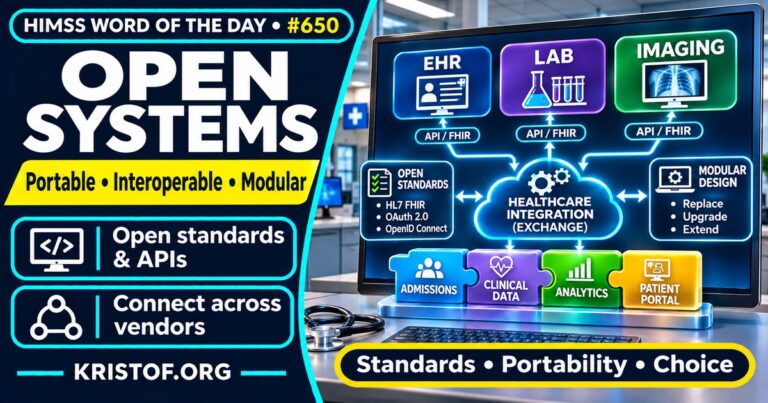
An open system combines portability and interoperability and uses open standards, so hardware and software are not tied to a single vendor. This post explains the HIMSS Dictionary entry, then reviews ONC’s February 2026 data brief on hospital API use and four articles on open standards and vendor lock-in, including what the evidence does not show.
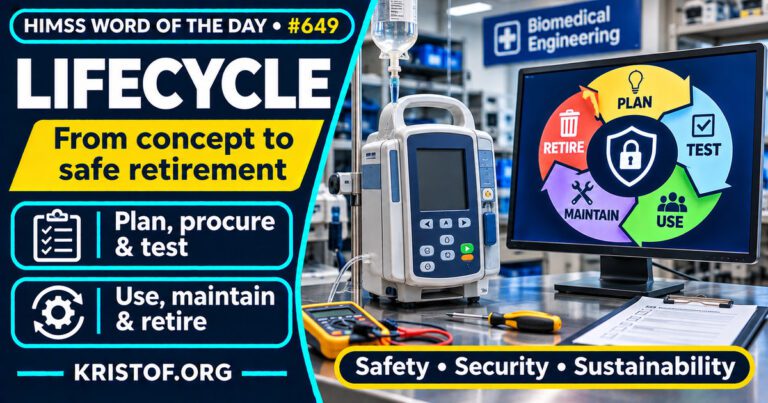
In the HIMSS Dictionary, a lifecycle covers every phase of a medical device or system, from concept to decommissioning and disposal. This post explains FDA’s Total Product Life Cycle model, the stages a hospital manages, and what reviews say about safety, cybersecurity, and risk management, including what the evidence does not show.
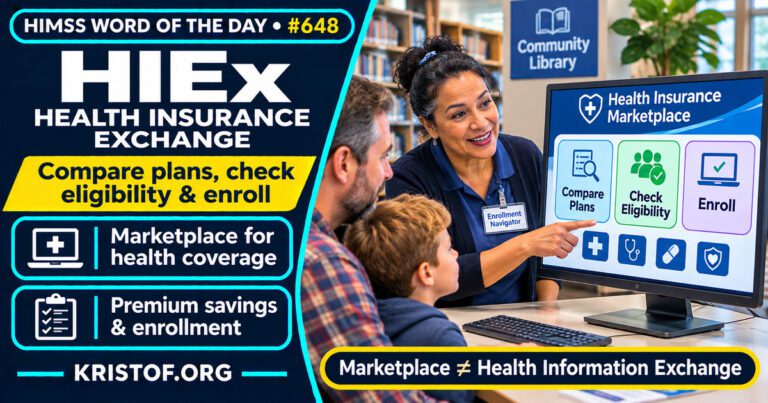
A health insurance exchange, also called a marketplace, is a service where people compare and enroll in health plans. It is not the same as a health information exchange. This post explains the HIMSS Dictionary entry, how HealthCare.gov describes the Marketplace, and what four published studies found about plan choice and coverage churn.
Whether you’re a recruiter with a Healthcare IT opportunity or a colleague in the industry — I’d love to hear from you.